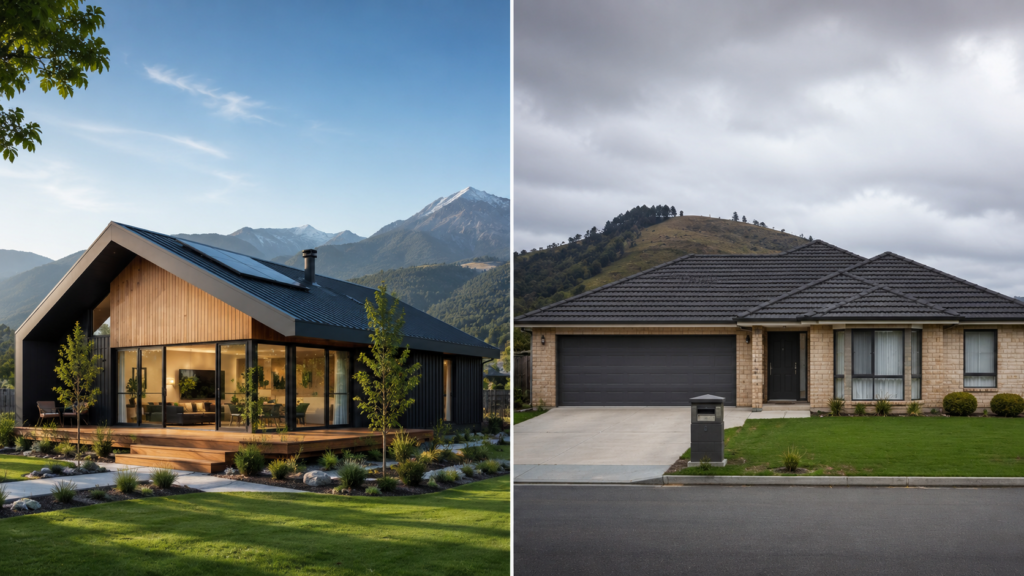
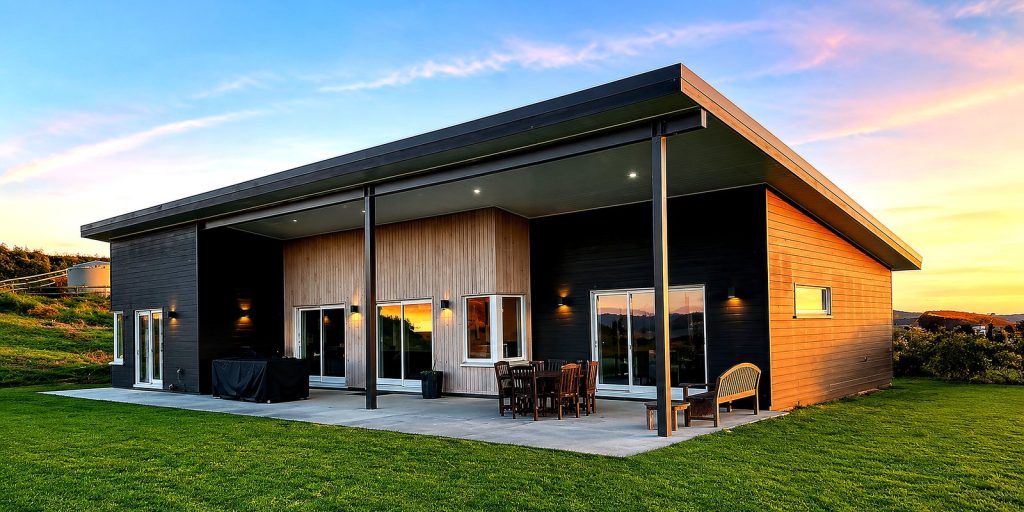
Is a High Performance Home Worth It?
benefits of High Performance Home, energy efficient house NZ,
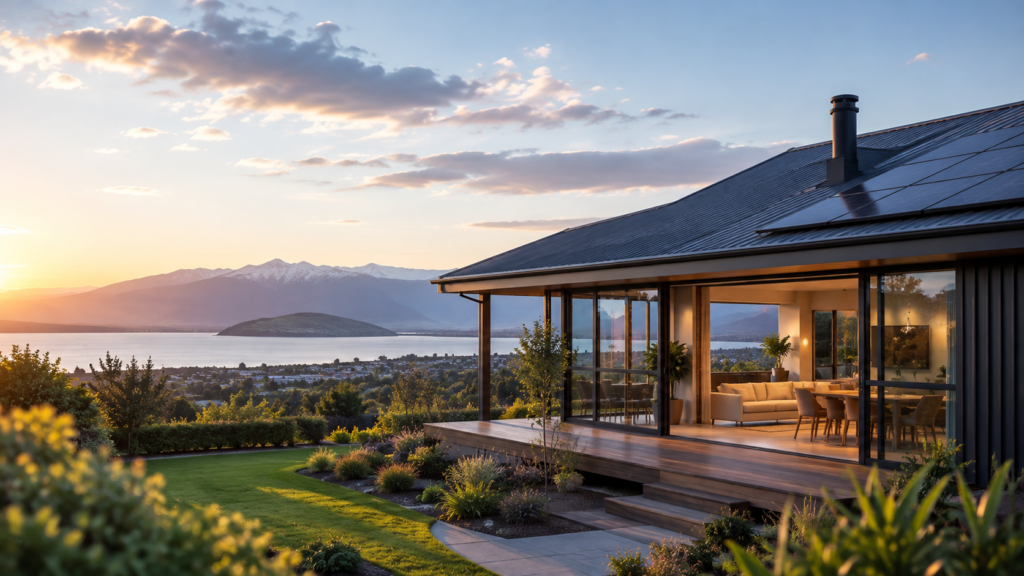
It’s a fair question, and one worth asking honestly rather than answering with a sales pitch. A High Performance Home costs more upfront than a bare-minimum build. Whether that’s ‘worth it’ depends on what you’re actually measuring, and most homeowners, once they understand what they’re paying for, find the answer clearer than they expected.
Start with what you’re actually buying
The premium on a High Performance Home isn’t spent on a single flashy feature. It’s spread across continuous insulation from slab to roofline, an airtight building envelope that’s tested rather than assumed, thermally broken high-performance joinery, and a mechanical heat recovery ventilation system that keeps fresh, filtered air moving through the home without losing the heat already paid for. Each of those is a genuine, physical difference in how the building is put together, not a marketing overlay on a standard spec.
A quick way to reframe the question
Instead of asking whether a High Performance Home is worth it in isolation, it can help to ask a slightly different question: worth it compared to what? Compared to a bare-Code build, yes, for most owners planning to live in the home for more than a few years. Compared to building a standard home now and trying to retrofit performance later, almost always yes, since retrofitting insulation, airtightness and ventilation into an already-lined, already-occupied home is considerably more expensive and disruptive than building it in from the start.
The comfort return, measured in ordinary moments
Ask any owner of a genuinely high-performance home what they notice most, and it’s rarely a statistic. It’s the floor that’s not cold underfoot in July. The bedroom that doesn’t need a heater running all night to stay comfortable. The lack of a musty smell in the hallway cupboard come spring. These are small, ordinary moments repeated daily for as long as the family lives in the home, which is exactly why they add up to more value than they might suggest on first hearing about them.
The financial return, measured honestly
Running cost savings are real, but they vary by household, so any builder promising an exact power bill figure should be treated with some scepticism. What can be said with confidence: because a High Performance Home loses far less heat in winter and gains far less unwanted heat in summer, it typically needs significantly less energy to stay comfortable than a standard equivalent. At HP Homes’ Kinloch project, the owners’ total power costs across three full years came to roughly $80, an outcome shaped by good design and orientation as much as any single product. A separate alpine build performs efficiently enough that its owners receive power credits rather than bills. Individual results will always depend on the household, the site and how the home is used, but the direction of travel is consistent.
The health return, which is harder to put a number on
Reduced condensation and mould risk, filtered air that removes up to 95 percent of pollen through a well-specified ventilation system, and more stable indoor temperatures all have a genuine impact on respiratory health, particularly for households with asthma, allergies or young children. This is a benefit that’s difficult to price but easy to notice: fewer winter colds lingering in a damp bedroom, less reaching for antihistamines during pollen season, a home that simply feels easier to breathe in.
The durability return, which shows up later
Moisture is one of the most common causes of long-term damage in New Zealand homes: timber decay, mould in wall cavities, deteriorating linings. A well-detailed airtight envelope with proper ventilation significantly reduces the conditions that cause this kind of damage in the first place, which means a High Performance Home is often cheaper to maintain over a twenty or thirty-year ownership period, even before running costs are factored in.
Common doubts worth addressing directly
Two objections come up often. The first is that a High Performance Home will feel sealed and artificial because it’s airtight. In practice, the opposite tends to happen: owners can still open windows whenever they like, but they no longer need to, because the ventilation system is already supplying fresh, filtered air continuously. The second objection is that the extra spend is really just for a certification or a label. Certification is optional; the physical differences in insulation, airtightness, joinery and ventilation are not, and they’re what actually deliver the comfort and efficiency, regardless of whether a formal certificate is issued.
Why the builder matters as much as the specification
Even a well-designed high-performance specification can underperform if it isn’t built with genuine attention to detail: a poorly sealed penetration, an insulation gap behind a light fitting, or a ventilation system that’s never properly commissioned can all quietly undo a portion of the intended performance. This is why the value of a High Performance Home is realised as much through the builder’s process, quality control and testing as through the specification on paper. It’s worth asking any prospective builder how they verify performance during construction, not just how they describe it in a brochure.
Who it’s genuinely worth it for
The value case is strongest for anyone planning to own the home long term, anyone building in a colder or more exposed location, and anyone who already knows what it’s like to live in a cold, damp New Zealand house and has decided not to repeat it. It’s a weaker case for a short-term investment build with no intention of living in it. Most people asking this question already know which category they fall into: the honest answer to ‘is it worth it’ usually depends less on the building science and more on how long you’re planning to live with the result.
Questions, answered.
Everything you need to know before starting a High Performance Home from build timelines to site suitability. Can't find your answer here?
GET IN TOUCHGreater comfort through stable indoor temperatures, healthier air through filtered mechanical ventilation, lower energy demand for heating and cooling, and improved long-term durability due to reduced moisture and condensation risk.