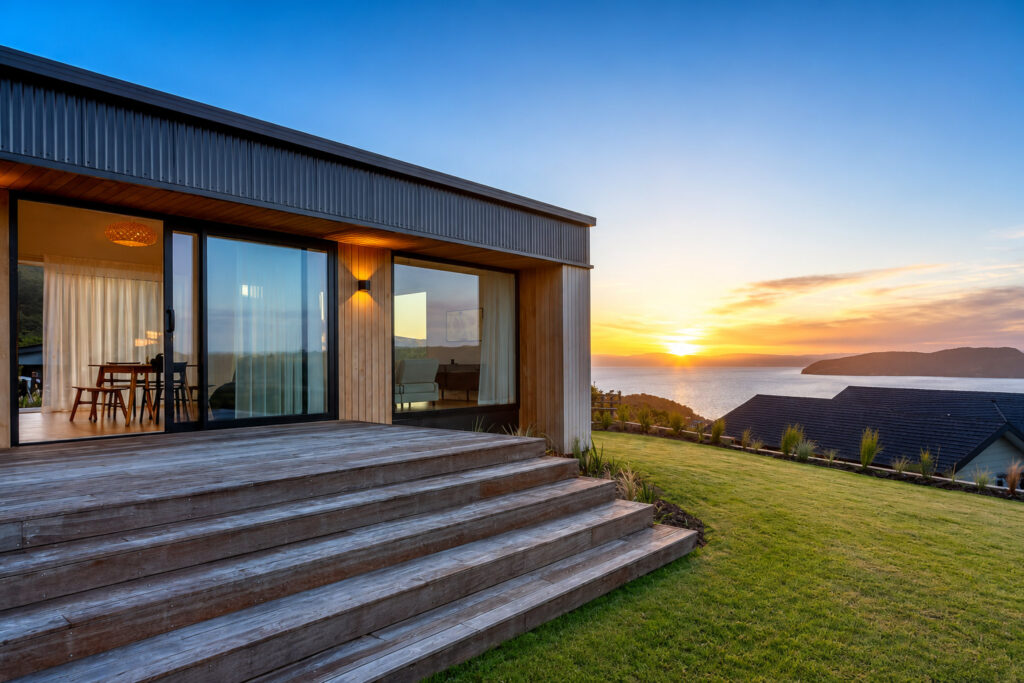
High Performance Windows in Taupō: Big Views Without Heat Loss
How high performance windows let Taupō homes keep big lake and mountain views without losing heat. Why HP Homes builds with Starke uPVC joinery.
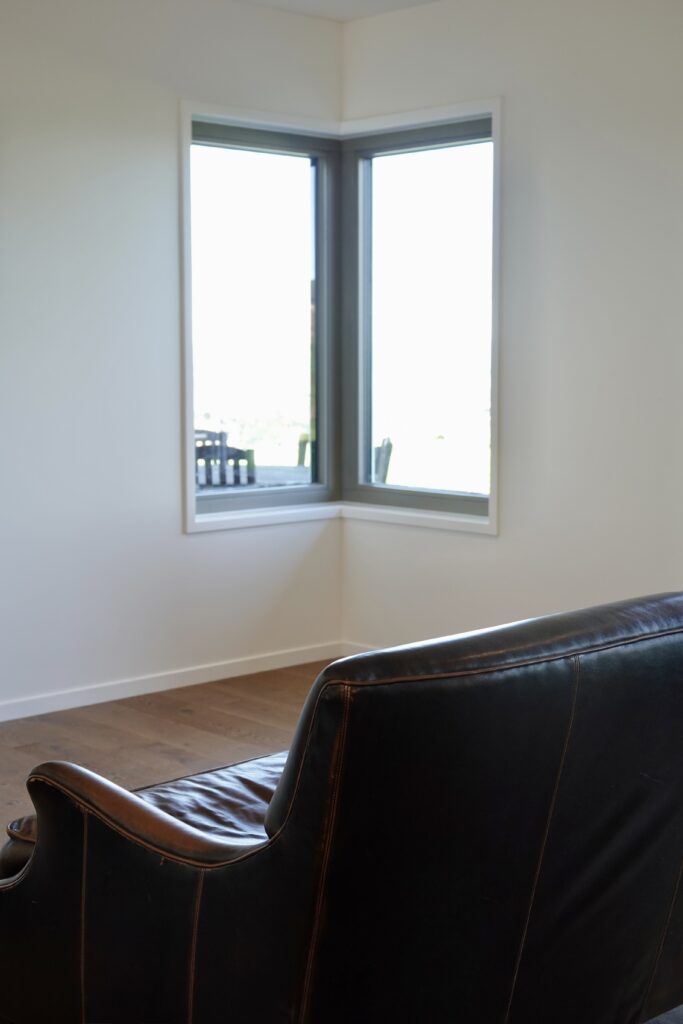
High performance windows are thermally broken, airtight window and door systems that lose far less heat than standard aluminium joinery. In Taupō they let you keep large lake and mountain views without cold rooms, condensation or high heating bills. HP Homes builds with Starke uPVC windows and doors, designed in Germany and made in New Zealand.
Why windows matter so much in a Taupō home
Most people building around Lake Taupō want glass. Kinloch, Acacia Bay and the elevated sites above the township all have views worth framing. But windows are usually the weakest part of a building’s thermal envelope. In a standard New Zealand house, aluminium frames conduct heat straight out of the room, glazing seals leak air, and large windows facing the wrong way overheat in summer.
The result is familiar to anyone who has lived through a Taupō winter in an ordinary house: condensation running down the glass in the morning, a cold zone near every window, and a heat pump working hard to keep up.
What makes a window “high performance”?
A high performance window does four things well:
- Insulated frame. Multi-chamber uPVC (or thermally broken) frames stop the frame itself acting as a cold bridge.
- High-performance glazing. Double or triple glazing with low-E coatings and gas fill keeps the inside pane warm.
- Airtight seals. Compression seals on every opening sash stop draughts and the moisture they carry.
- Correct installation. The window is taped into the home’s airtight layer so there’s no leakage path around the frame.
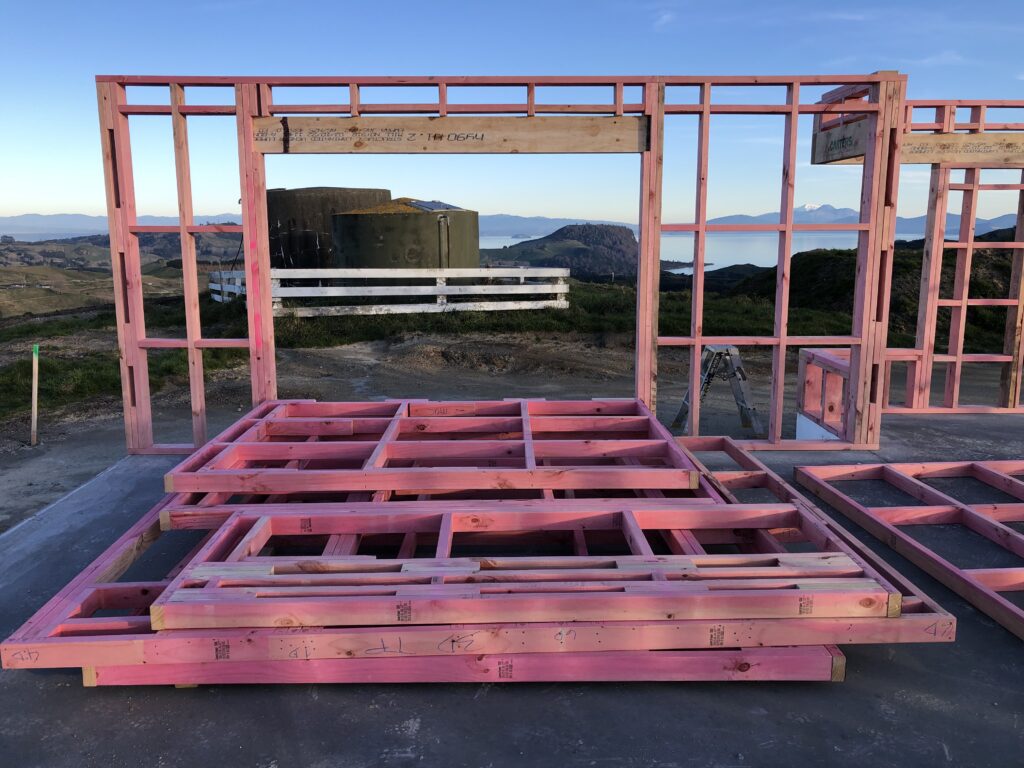
The last point is the one most often missed. Even an excellent window performs poorly if it is installed into a leaky wall. On HP Homes builds the joinery is detailed into the Pro Clima airtight membrane and checked during blower-door testing.
Why HP Homes uses Starke uPVC joinery
Starke windows and doors are one of the five principles behind every HP Homes build. We use them because they:
- have multi-chamber uPVC frames that keep the inside surface warm, which reduces condensation;
- are airtight by design, which supports the whole-house airtightness we test for;
- don’t need painting and won’t rot or corrode;
- are made in New Zealand, so lead times and support are local.
uPVC joinery has been the standard in Europe and North America for decades and is becoming more common in New Zealand as homeowners look beyond the minimum Building Code.
How we design big views without losing heat
1. Orientation first
Before window sizes are drawn, we map the sun path, prevailing winds and view lines for the site. North-facing glass brings free winter sun; south-facing glass (often where Lake Taupō views are) is sized and specified carefully because it receives little solar gain.
2. Shading for summer
Deep eaves and careful placement let low winter sun in and keep high summer sun out, so a glass-heavy home doesn’t overheat.
3. Joinery as part of the envelope
Windows, insulation, airtightness and ventilation are designed as one system. On the Jetty House in Kinloch, generous glazing on a steep site was paired with a fully airtight, insulated envelope and blower-door tested to below 1 air change per hour, so the panoramic view never came at the cost of comfort.
Real results from Taupō homes
Good joinery is one part of a system, but it’s an important one. The Kinloch High Performance Home, built to Passive House principles with careful window placement, had an $80 power bill across its first three years. The Alpine High Performance Home, at 600 m with large south-facing views, earns power credits instead of bills.
Frequently asked questions
Do large windows make a house colder?
In a standard home, usually yes. With high performance joinery, correct orientation and an airtight installation, large windows can be part of a warm, efficient home.
Is uPVC joinery better than aluminium?
For thermal performance, uPVC frames insulate much better than standard aluminium and reduce condensation. Thermally broken aluminium sits in between.
Do I need triple glazing in Taupō?
Not always. Double glazing in a well-insulated, airtight frame is often enough. On cold, elevated or south-facing sites, triple glazing can be worth it. We decide this with energy modelling during design.
Can high performance windows be added to an existing home?
Yes, as part of a renovation. The best results come when the windows are installed with airtightness and insulation upgrades rather than on their own.
Planning a home with views in Taupō, Kinloch or Acacia Bay? Talk to Mat about how window design, orientation and joinery come together on your site.