Solar, Heat Pump Hot Water and EV Charging in a High Performance Home
Solar panels, a heat pump hot water cylinder and EV charging all lower running costs, but they work best in a home that already needs very little energy. In a high performance home, heating demand is so low that hot water and appliances become the main energy uses, so an efficient hot water heat pump and a modest solar array can cover a large share of what the house needs. The right order is: build an efficient envelope first, then choose efficient hot water, then add solar and EV charging.
It is tempting to start with solar panels. They are visible and easy to understand. But putting solar on a cold, leaky house is like filling a bucket with a hole in it. The biggest savings come from not needing the energy in the first place.
Step 1: Cut the heating first
In a typical Taupō home, space heating is the largest energy use through a long winter. A high performance home, with an insulated slab, an airtight envelope, high-performance windows and heat-recovery ventilation, needs a fraction of that heat. Once heating is cut back, everything else you add goes further. See how high performance homes reduce energy bills.
Step 2: Efficient hot water
When heating is small, hot water often becomes the biggest single energy use in the house. A heat pump hot water cylinder extracts heat from the surrounding air and moves it into the water, using far less electricity than a standard element cylinder. We use Stiebel Eltron units. Read more in Stiebel Eltron heat pump hot water in Taupō.
Tips for hot water:
- keep pipe runs from the cylinder to the kitchen and bathrooms short;
- insulate hot water pipes;
- size the cylinder to your household, not the biggest available;
- if you have solar, schedule water heating for the middle of the day.
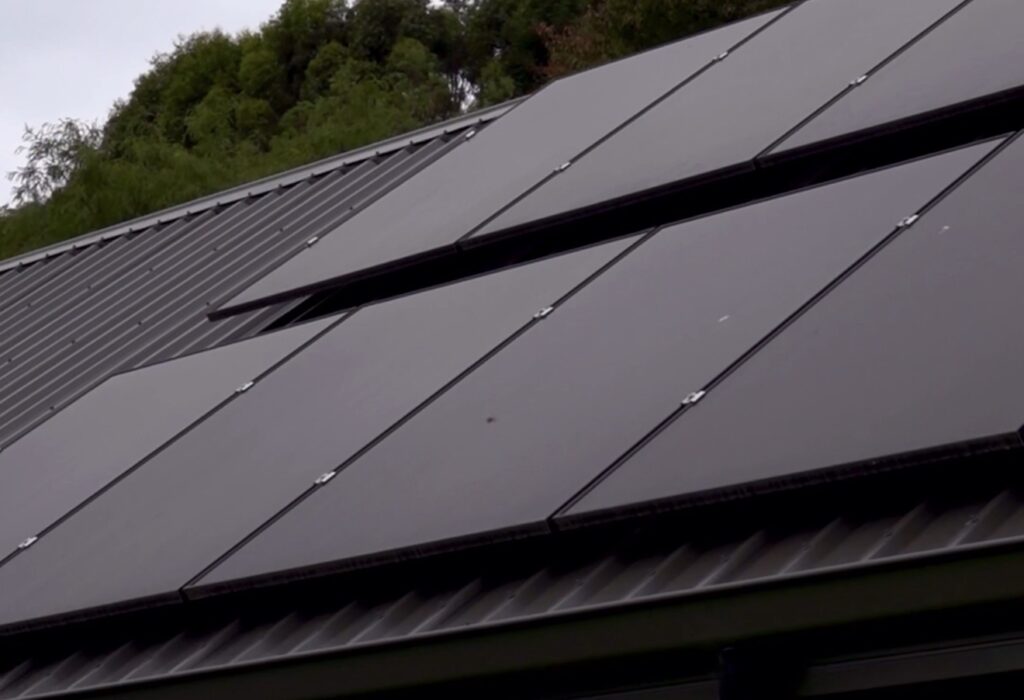
Step 3: Solar panels
Taupō gets plenty of clear, sunny days, including in winter. In a home that uses little energy, a modest solar array can cover a big share of daytime use, and surplus power is exported to the grid. Our Alpine High Performance Home was handed over with solar PV, heat-recovery ventilation and performance monitoring commissioned, and its owners receive power credits instead of bills.
Things to plan for at design stage:
- a roof plane facing north, or east and west, with little shading;
- roof structure and penetrations planned so the airtight layer is not compromised;
- space for an inverter and, if wanted later, a battery.
Step 4: EV charging
An electric car can be one of the biggest electricity users in a household. Charging it from your own solar during the day, or on cheap overnight rates, makes a large difference to running costs. Even if you do not own an EV yet, it is cheap to run cabling for a future charger during construction and expensive to add later.
Step 5: Lighting and appliances
LED lighting, efficient appliances and an induction cooktop round things out. Induction also suits airtight homes because it does not release combustion gases indoors.
Do I still need a heat pump for space heating?
Often only a small one, or sometimes a single heater for the coldest days, because the house loses so little heat. Energy modelling shows how much heating your design needs, so you do not oversize the system.
What order should I invest in?
| Priority | Why |
|---|---|
| 1. Envelope: insulation, airtightness, windows | Hardest and most expensive to fix later; lasts the life of the house |
| 2. Heat-recovery ventilation | Fresh, dry air without losing heat |
| 3. Heat pump hot water | Becomes the biggest energy use once heating is low |
| 4. Solar PV | Covers much of the remaining use |
| 5. EV charger and battery | Can be added later if cabled during the build |
Frequently asked questions
Is solar worth it in Taupō?
Taupō’s sunny climate suits solar, and it works best on a house that already uses little energy. Your designer or a solar installer can estimate output for your roof.
Can a high performance home have no power bills?
It can come close. Our Alpine home receives power credits instead of bills, and our Kinloch home cost its owners around $80 in power over three years. Results depend on the house, the household and the power plan.
Should I add a battery?
Batteries can store daytime solar for the evening. They are worth considering, and planning space and cabling during the build keeps the option open.
Does heat pump hot water work in cold Taupō winters?
Yes. Modern units are designed to work in cold conditions, and they are most efficient when located and sized well.
Can I add solar later?
Yes. If roof orientation, structure and cabling are planned during the build, adding solar later is straightforward.
Planning a low-energy home? Talk to Mat about the right mix for your site, or see our passive and sustainable builds service.
Planning to build?
Talk to Mat about your Taupō build
Book a consult to talk through your section, design ideas and budget, and how a high performance home could work for you.
Book a consultOr call Mat on 021 285 1445