Understanding Your Home’s Performance Numbers
A few numbers tell you most of what you need to know about how a new home will perform: heating demand (kWh per square metre per year), airtightness (air changes per hour at 50 Pascals, or ACH50), the R-values or U-values of the walls, roof, floor and windows, and the heat recovery efficiency of the ventilation system. Ask your builder for these numbers before you build, because they predict how warm your home will be and how much it will cost to heat.
Most people compare homes by floor area, bedrooms and price. Those numbers say nothing about comfort. A high performance home is designed and tested against measurable targets, and understanding them helps you compare builders and designs on something that matters every day you live there.
Heating demand: kWh/m² per year
Heating demand is the amount of heat the home needs each year to stay at a comfortable temperature, divided by its floor area. It comes from energy modelling such as PHPP. Lower is better. For context, the international Passive House standard caps it at 15 kWh per square metre per year. A typical older New Zealand house needs many times that.
Why it matters: it is the clearest single prediction of your heating bill and how warm the house will feel.
Heating load: W/m²
Heating load is the peak amount of heat needed on the coldest day, in watts per square metre. It tells you how big the heating system needs to be. A low heating load means a small heat pump or even a single heater can warm the whole house.
Airtightness: ACH50
ACH50 is measured with a blower-door test. A fan pressurises the house to 50 Pascals, and the result is how many times the full volume of air leaks out per hour. Lower is better. Passive House requires 0.6 ACH50 or less. Many ordinary New Zealand homes test far higher. Our Jetty House in Kinloch was blower-door tested to below 1 ACH50.
Why it matters: leaks undo insulation, let in draughts and push moisture into walls. See what airtightness means.
R-values and U-values
An R-value measures how well a material or assembly resists heat flow. Higher is better. A U-value is the opposite: how easily heat passes through, in watts per square metre per degree. Lower is better. New Zealand uses R-values for walls, roofs and floors, while window makers often quote U-values.
- Roof: usually the easiest place to add a lot of insulation.
- Walls: look for the R-value of the whole wall system, not just the insulation batts, because framing creates thermal bridges.
- Floor: an insulated slab such as MAXRaft® stops heat leaking into cold ground. See insulated slab foundations.
- Windows: always the weakest part of the envelope, so frame and glass quality matter. See high-performance windows.
Thermal bridges: psi-values
Thermal bridges are places where heat bypasses insulation, such as slab edges, window installation joints and framing. In detailed modelling they are measured as psi-values. You do not need to know the maths. Just ask whether your builder designs junctions to minimise thermal bridging.
Heat recovery efficiency: %
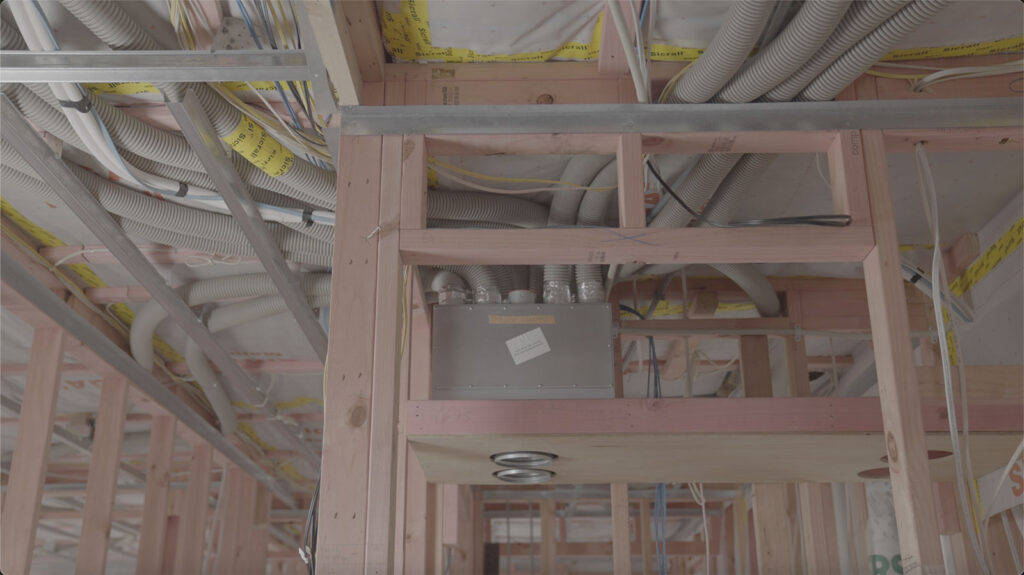
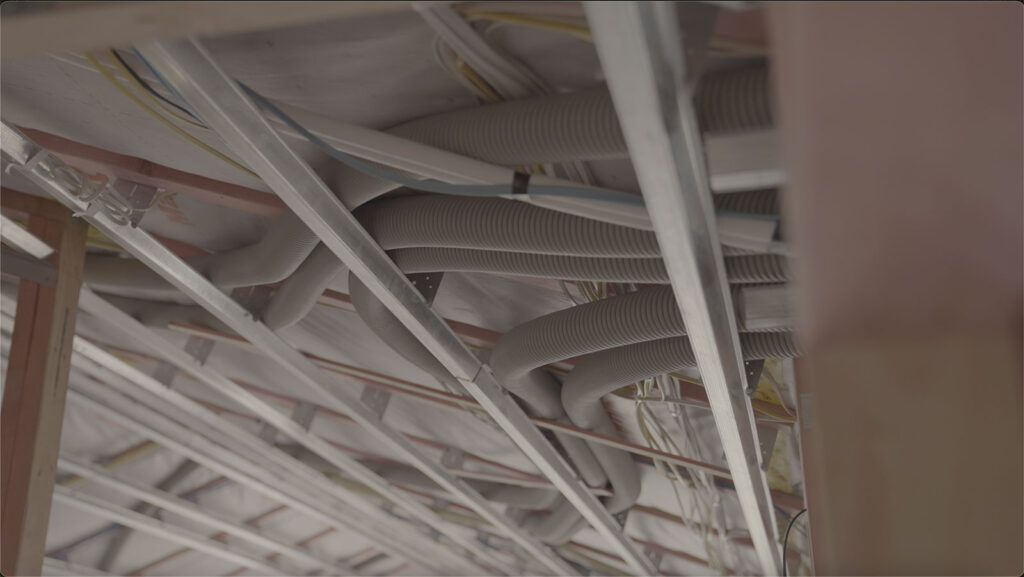
A heat-recovery ventilation system (MHRV) captures warmth from outgoing stale air and transfers it to incoming fresh air. Efficiency is given as a percentage. The systems we install recover around 70 to 90% of the heat. Higher means less heating needed for the same fresh air. See why fresh air matters.
Overheating frequency: %
Energy models also estimate how often the home will exceed 25°C. Passive House limits this to 10% of the year, and many designers aim lower. It is a useful check that a warm winter home will not be uncomfortable in a Taupō summer.
The numbers that matter most to you
In the end, owners care about results: comfort, health and running costs. Our Kinloch High Performance Home was PHPP-modelled and blower-door verified, and its owners received an $80 power bill across three years. The Alpine home at 600 m receives power credits instead of bills. The technical numbers are how you get there.
What to ask your builder
| Question | Why |
|---|---|
| Will you model the energy performance before consent? | Shows heating demand and overheating before you commit |
| Will you test airtightness, and when? | Testing during the build lets leaks be fixed |
| What are the R-values of the whole wall, roof and floor? | Compares real performance, not just batts |
| What is the window frame and glass specification? | Windows are the weakest link |
| What is the ventilation system’s heat recovery? | Fresh air without losing heat |
Frequently asked questions
What is a good ACH50 result for a new home?
Passive House requires 0.6 or less. Any result well under 3 is a big improvement on a typical new house. Ask your builder what target they work to.
Is a higher R-value always better?
Generally, but only if the rest of the envelope keeps up. Very thick insulation with leaky junctions or poor windows will not perform as the number suggests.
Can I get these numbers for an existing home?
Yes. A blower-door test and an energy assessment can be done on an existing house, which is a useful first step before a renovation.
Does HP Homes provide performance numbers?
Yes. We use PHPP energy modelling before consent and test airtightness during construction. See concept design and energy modelling.
What is PHPP?
The Passive House Planning Package, a detailed energy modelling tool from the Passive House Institute. Read more in Passive House certification in NZ.
Want to see the numbers for your design? Talk to Mat about energy modelling before you build.
Planning to build?
Talk to Mat about your Taupō build
Book a consult to talk through your section, design ideas and budget, and how a high performance home could work for you.
Book a consultOr call Mat on 021 285 1445