Passive House vs High Performance Home in Taupō: What’s the Difference?
Passive House is a certified standard; a high performance home uses the same principles without certification. Which suits a Taupō or Central Plateau build?
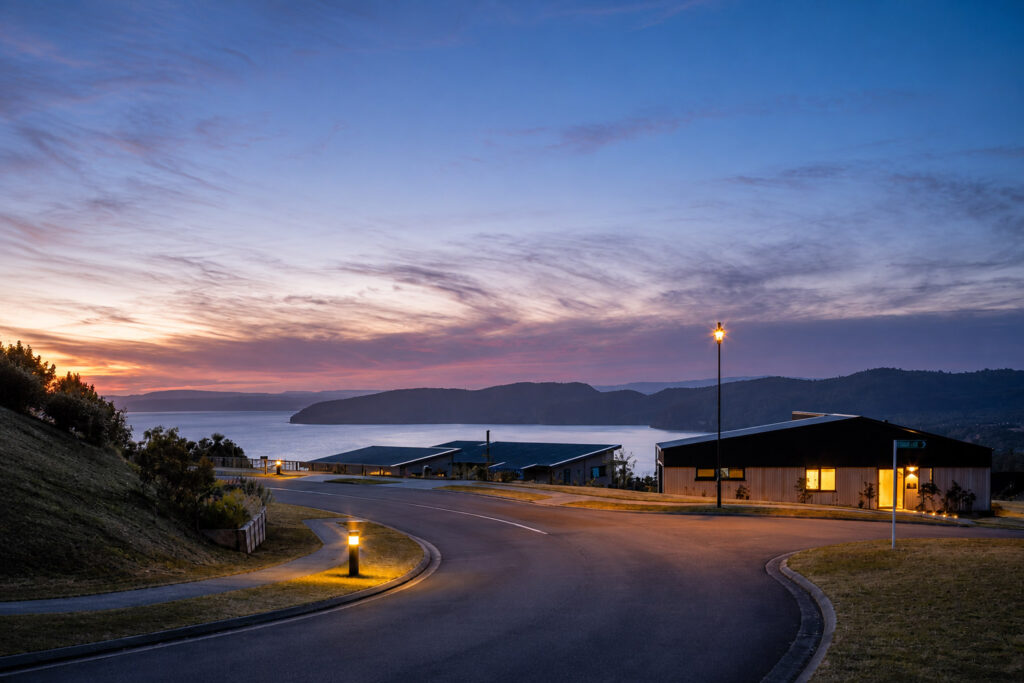
A Passive House is a home certified to a strict international standard from the Passive House Institute in Germany, with measured limits on heating demand, airtightness and energy use. A high performance home uses the same principles (insulation, airtightness, high performance windows and heat-recovery ventilation) to go well beyond the New Zealand Building Code, but without formal certification. Every certified Passive House is a high performance home; not every high performance home is a certified Passive House. For most Taupō and Central Plateau builds, either approach delivers a warm, dry home through our frosty winters.
Quick comparison
| Certified Passive House | High performance home | |
|---|---|---|
| What it is | An international certification standard | A way of building well above Code |
| Performance targets | Fixed, strict limits that must be proven | Set for your site, goals and budget |
| Airtightness | Must meet the standard’s limit | Tested and targeted, typically far better than standard homes |
| Energy modelling | PHPP modelling required | Recommended (HP Homes uses PHPP) |
| Certification cost and paperwork | Yes: certifier, documentation, testing | No formal certification |
| Design flexibility | Lower: design must hit the numbers | Higher: you choose where to invest |
| Comfort and health | Excellent | Excellent when designed and built properly |
What is a Passive House?
Passive House (Passivhaus) began in Germany and is now used worldwide. To be certified, a home must meet strict limits for heating demand, airtightness, thermal comfort and primary energy use, and this has to be proven through PHPP (Passive House Planning Package) modelling, documentation and testing. In New Zealand the standard is promoted by the Passive House Institute New Zealand (PHINZ).
What is a high performance home?
A high performance home is designed and built as a complete system to deliver much better comfort, health and energy efficiency than the Building Code minimum. At HP Homes that means five principles working together:
- Considered design: orientation, solar gain and shading resolved first
- High insulation, starting with an insulated MAXRaft® slab
- A measured Pro Clima airtight envelope
- High performance Starke uPVC windows and doors
- Mechanical ventilation with heat recovery (MHRV)
Read more in What is a high performance home?
Is a high performance home as good as a Passive House?
It can come very close. The Kinloch High Performance Home was built to Passive House principles with full PHPP modelling and blower-door-verified airtightness, but without certification. Its owners received an $80 power bill across their first three years. What certification adds is independent proof against a fixed benchmark, which some owners value highly.
Which should you choose?
Choose certified Passive House if:
- you want independent, internationally recognised proof of performance;
- you are aiming for the lowest possible energy use;
- you’re comfortable with the extra design constraints, documentation and certification cost.
Choose a high performance home if:
- you want excellent comfort and low running costs;
- you want more design flexibility, for example larger view windows on a south-facing lake site;
- you want to put your budget where it makes the most difference for your site.
What about cost?
Both cost more up front than a Code-minimum build, mainly in insulation, joinery, airtightness work and ventilation. Certification adds design, documentation and testing costs on top. The return comes back over the life of the house through lower power bills, better health and comfort, and durability. We give concept costings during concept design and energy modelling, before you commit to a build.
Frequently asked questions
Does HP Homes build certified Passive Houses?
We build to Passive House principles and use PHPP energy modelling. If you want formal certification, we’ll plan for it from the start with your designer and a certifier.
Is Passive House worth it in Taupō?
Yes. Taupō’s frosty winters and elevated sites are where passive principles pay off most. Heating demand in a standard Taupō home is high, so cutting it makes the biggest difference to comfort and power bills.
Do Passive Houses and high performance homes need special ventilation?
Yes. Because both are airtight, they use balanced mechanical ventilation with heat recovery to supply filtered fresh air and remove moisture. See why fresh air matters.
Not sure which approach suits your build? Talk to Mat. The first conversation is free.
Weighing up passive vs high performance? Our passive and energy-efficient home builders in Taupō can walk you through both options. Before you sign with anyone, read what an LBP, Master Builder and 10-year guarantee really mean.