Category: Owner’s Guide
Is a High Performance Home Worth It?
benefits of High Performance Home, energy efficient house NZ,
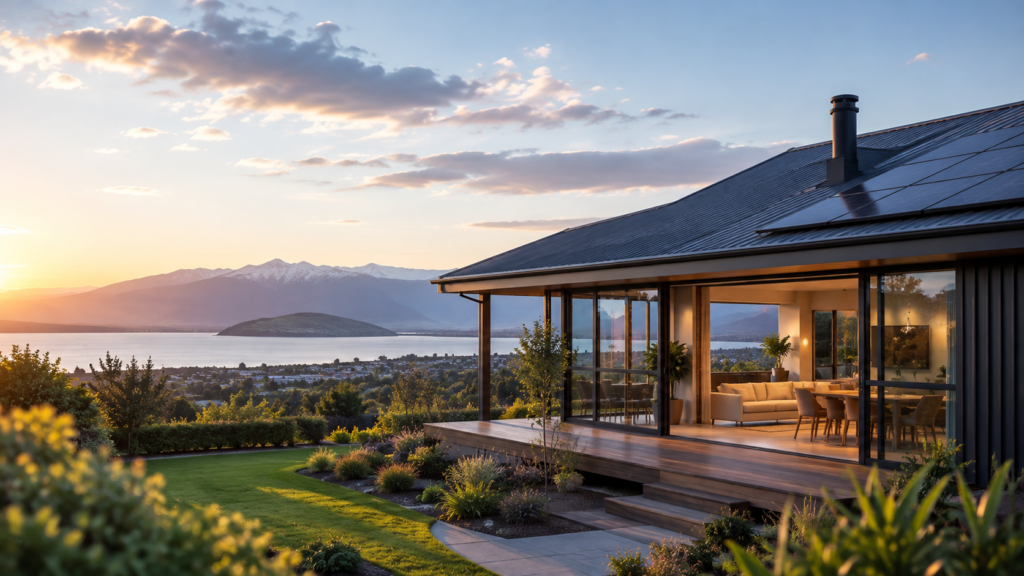
It’s a fair question, and one worth asking honestly rather than answering with a sales pitch. A High Performance Home costs more upfront than a bare-minimum build. Whether that’s ‘worth it’ depends on what you’re actually measuring, and most homeowners, once they understand what they’re paying for, find the answer clearer than they expected.
Start with what you’re actually buying
The premium on a High Performance Home isn’t spent on a single flashy feature. It’s spread across continuous insulation from slab to roofline, an airtight building envelope that’s tested rather than assumed, thermally broken high-performance joinery, and a mechanical heat recovery ventilation system that keeps fresh, filtered air moving through the home without losing the heat already paid for. Each of those is a genuine, physical difference in how the building is put together, not a marketing overlay on a standard spec.
A quick way to reframe the question
Instead of asking whether a High Performance Home is worth it in isolation, it can help to ask a slightly different question: worth it compared to what? Compared to a bare-Code build, yes, for most owners planning to live in the home for more than a few years. Compared to building a standard home now and trying to retrofit performance later, almost always yes, since retrofitting insulation, airtightness and ventilation into an already-lined, already-occupied home is considerably more expensive and disruptive than building it in from the start.
The comfort return, measured in ordinary moments
Ask any owner of a genuinely high-performance home what they notice most, and it’s rarely a statistic. It’s the floor that’s not cold underfoot in July. The bedroom that doesn’t need a heater running all night to stay comfortable. The lack of a musty smell in the hallway cupboard come spring. These are small, ordinary moments repeated daily for as long as the family lives in the home, which is exactly why they add up to more value than they might suggest on first hearing about them.
The financial return, measured honestly
Running cost savings are real, but they vary by household, so any builder promising an exact power bill figure should be treated with some scepticism. What can be said with confidence: because a High Performance Home loses far less heat in winter and gains far less unwanted heat in summer, it typically needs significantly less energy to stay comfortable than a standard equivalent. At HP Homes’ Kinloch project, the owners’ total power costs across three full years came to roughly $80, an outcome shaped by good design and orientation as much as any single product. A separate alpine build performs efficiently enough that its owners receive power credits rather than bills. Individual results will always depend on the household, the site and how the home is used, but the direction of travel is consistent.
The health return, which is harder to put a number on
Reduced condensation and mould risk, filtered air that removes up to 95 percent of pollen through a well-specified ventilation system, and more stable indoor temperatures all have a genuine impact on respiratory health, particularly for households with asthma, allergies or young children. This is a benefit that’s difficult to price but easy to notice: fewer winter colds lingering in a damp bedroom, less reaching for antihistamines during pollen season, a home that simply feels easier to breathe in.
The durability return, which shows up later
Moisture is one of the most common causes of long-term damage in New Zealand homes: timber decay, mould in wall cavities, deteriorating linings. A well-detailed airtight envelope with proper ventilation significantly reduces the conditions that cause this kind of damage in the first place, which means a High Performance Home is often cheaper to maintain over a twenty or thirty-year ownership period, even before running costs are factored in.
Common doubts worth addressing directly
Two objections come up often. The first is that a High Performance Home will feel sealed and artificial because it’s airtight. In practice, the opposite tends to happen: owners can still open windows whenever they like, but they no longer need to, because the ventilation system is already supplying fresh, filtered air continuously. The second objection is that the extra spend is really just for a certification or a label. Certification is optional; the physical differences in insulation, airtightness, joinery and ventilation are not, and they’re what actually deliver the comfort and efficiency, regardless of whether a formal certificate is issued.
Why the builder matters as much as the specification
Even a well-designed high-performance specification can underperform if it isn’t built with genuine attention to detail: a poorly sealed penetration, an insulation gap behind a light fitting, or a ventilation system that’s never properly commissioned can all quietly undo a portion of the intended performance. This is why the value of a High Performance Home is realised as much through the builder’s process, quality control and testing as through the specification on paper. It’s worth asking any prospective builder how they verify performance during construction, not just how they describe it in a brochure.
Who it’s genuinely worth it for
The value case is strongest for anyone planning to own the home long term, anyone building in a colder or more exposed location, and anyone who already knows what it’s like to live in a cold, damp New Zealand house and has decided not to repeat it. It’s a weaker case for a short-term investment build with no intention of living in it. Most people asking this question already know which category they fall into: the honest answer to ‘is it worth it’ usually depends less on the building science and more on how long you’re planning to live with the result.
Questions, answered.
Everything you need to know before starting a High Performance Home from build timelines to site suitability. Can't find your answer here?
GET IN TOUCHGreater comfort through stable indoor temperatures, healthier air through filtered mechanical ventilation, lower energy demand for heating and cooling, and improved long-term durability due to reduced moisture and condensation risk.
High Performance Home vs Standard Home: What’s the Difference?
building performance NZ, standard home vs energy efficient home,
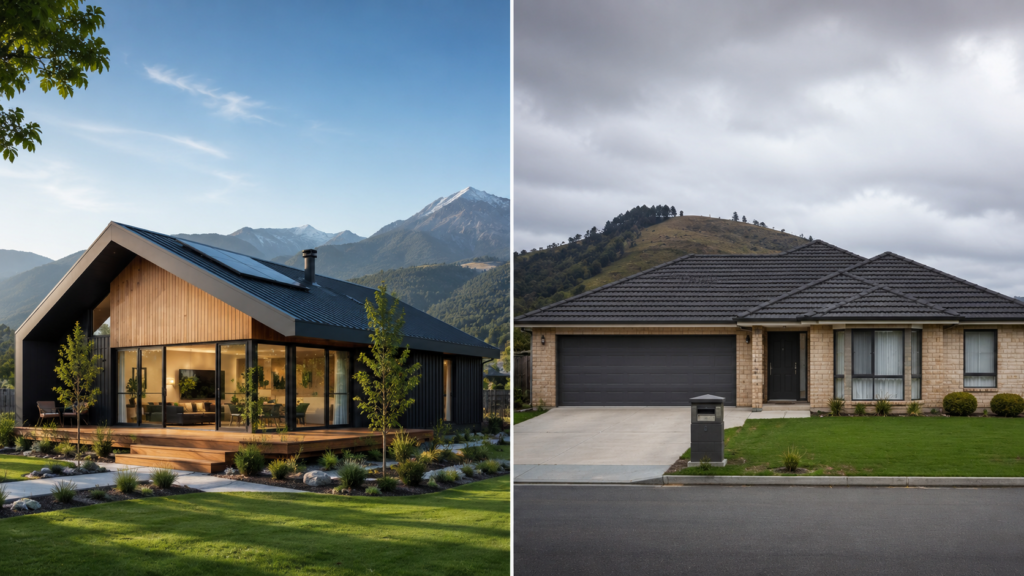
On paper, a standard new home and a High Performance Home can look almost identical: similar floor plan, similar cladding, similar roofline. The difference isn’t visible from the street. It shows up in how the house behaves once someone is actually living inside it: how quickly a room warms up on a frosty morning, how much the temperature swings between day and night, and what the power bill looks like in the depths of a Taupō winter.
Where the two builds genuinely diverge
A standard home is generally built to satisfy the New Zealand Building Code, a legal minimum for insulation, weathertightness and structural performance. A High Performance Home starts from the same regulatory baseline and then treats it as the starting point rather than the target, layering in continuous insulation, a measured airtight envelope, high-performance joinery and mechanical ventilation with heat recovery.
The practical differences follow from there. A standard home typically has basic insulation installed to Code minimums, with common gaps at junctions between walls, floors and roofs. A High Performance Home treats the entire envelope as one continuous thermal layer, detailed specifically to eliminate those weak points. A standard home relies on natural ventilation, such as gaps, extractor fans and opened windows, while a High Performance Home uses balanced mechanical ventilation to supply filtered fresh air continuously, without losing the heat already inside.
The build process itself looks different, too
The differences between the two aren’t only visible in the finished home; they show up during construction as well. A standard build generally follows a fairly conventional sequence, with insulation and building wrap installed as separate trades doing their own scope of work. A High Performance Home requires much closer coordination between trades, because airtightness and continuous insulation depend on the plumber, electrician and insulation installer all working around each other’s penetrations carefully, rather than each simply completing their own job independently. This is often the difference that’s hardest to see from a finished spec sheet, but it’s frequently the difference that most affects the final result.
Temperature stability, not just temperature
One of the most noticeable differences has less to do with how warm a home gets and more to do with how stable that warmth stays. In a standard home, indoor temperature often tracks closely with outdoor conditions and whatever heating is currently running: warm near the fire, cooler in the back bedrooms, a noticeable dip overnight once the heating switches off. A High Performance Home’s continuous insulation and airtight envelope significantly reduce that swing, so rooms stay within a much narrower temperature band through the day and night, without constant intervention from a heater or heat pump.
Air quality and moisture management
Standard homes depend on uncontrolled air leakage and the occasional opened window for fresh air, which also means moisture, dust and outdoor pollutants move in and out somewhat unpredictably. This is part of why condensation on windows and in roof spaces is such a common complaint in conventional New Zealand homes over winter. A High Performance Home’s mechanical heat recovery ventilation system continuously exchanges stale indoor air for filtered fresh air, actively managing humidity and reducing the conditions that lead to condensation and mould in the first place.
The cost comparison, honestly stated
A High Performance Home does typically cost more to build than a standard equivalent, since better insulation specification, airtight detailing, upgraded joinery and a ventilation system all add to the build cost. What’s less often discussed is what that money is actually buying: lower heating demand across the life of the home, reduced risk of moisture damage and the maintenance that follows it, and a level of comfort that a standard home generally can’t retrofit its way into without a significant renovation later on.
Noise, not just temperature
Acoustic comfort is one of the more underrated differences between the two. Standard construction, with its gaps and lighter-weight glazing, transmits a surprising amount of outside noise: traffic, wind, neighbouring properties. The same airtight envelope and high-performance joinery that stop heat escaping also happen to be very effective at keeping outside noise out, which is part of why owners of high-performance homes often describe the interior as noticeably quiet, even on a windy day near the lake.
Which one is right for your project
A standard home remains a reasonable option for owners prioritising the lowest possible upfront build cost and planning a shorter-term ownership horizon. A High Performance Home tends to make more sense for anyone planning to stay long term, anyone building in a colder or more exposed location such as the higher elevations around Taupō, and anyone who has already lived through a cold, draughty New Zealand winter and doesn’t want to repeat the experience in a brand-new house.
The clearest way to compare the two isn’t a spec sheet; it’s a conversation about how you actually want the finished home to feel, five, ten and twenty years after the final coat of paint goes on.
Questions, answered.
Everything you need to know before starting a High Performance Home from build timelines to site suitability. Can't find your answer here?
GET IN TOUCHThe main differences are continuous insulation across the entire building envelope, airtight construction that’s tested rather than assumed, high-performance joinery, and mechanical ventilation with heat recovery. Combined, these create a home with far more stable indoor temperatures and healthier air than a standard Code-built house.
High Performance Homes in New Zealand: The Complete Guide
high performance builder, high performance construction NZ, high performance house,
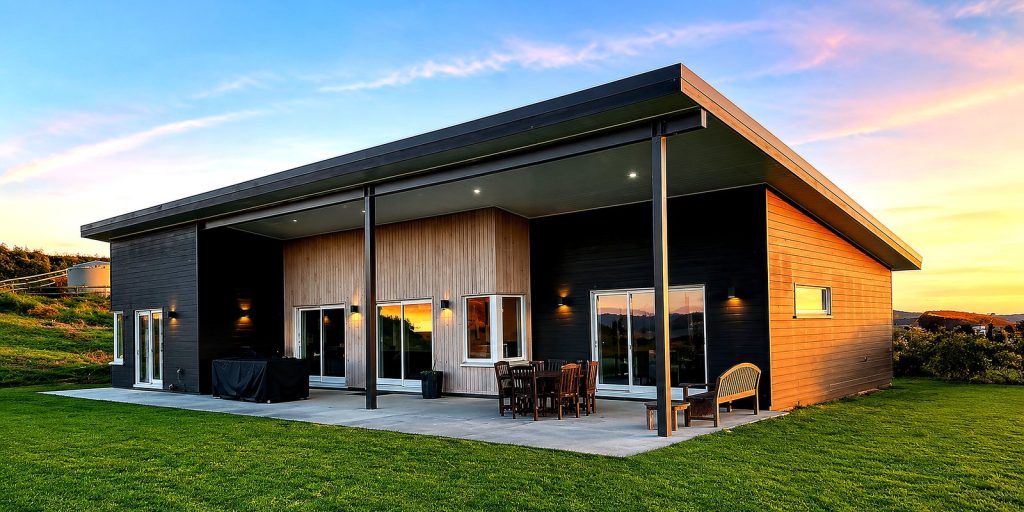
Most people start looking into High Performance Homes for a fairly ordinary reason. A cold bedroom. A power bill that keeps creeping up. A wall that fogs with condensation every June. By the time the phrase ‘High Performance Home’ shows up in a search bar, someone has usually already lived through a house that didn’t work as hard as it should have.
In New Zealand, that experience is common enough to be almost a rite of passage. Our building stock has a reputation, not always fair but not entirely undeserved, for being under-insulated, draughty and slow to warm up. A High Performance Home is the direct answer to that reputation. It isn’t a marketing label stuck onto a standard house with a heat pump and some extra batts. It’s a different way of designing and constructing a building, from the slab to the roofline, so that comfort, health and running costs are treated as outcomes to be engineered rather than hoped for.
What actually makes a home ‘high performance’
A High Performance Home is built around five principles that only work when they’re applied together: considered design, high levels of insulation, an airtight enclosure, high-performance joinery, and mechanical ventilation with heat recovery. Leave one out and the others start to underperform. Great insulation without airtightness still lets warm air leak out through gaps. An airtight house without proper ventilation traps moisture and stale air inside. It’s a system, not a shopping list.
At HP Homes, that system starts before a single stud is cut. Orientation, solar gain and shading are worked out at the design stage, so the building is already working with the sun rather than fighting it. From there, an insulated MAXRaft® slab, continuous wall and roof insulation, a measured Pro Clima airtight envelope, thermally broken uPVC joinery and a Stiebel Eltron heat recovery ventilation system are layered together as one continuous system, not a collection of separate trades doing their own thing.
Why the New Zealand Building Code isn’t the finish line
It surprises a lot of homeowners to learn that the Building Code sets a minimum standard, not a target for comfort. Meeting Code means a house is legally safe to build and consent, but it says very little about how warm it will feel in July or how much it will cost to heat over its lifetime. A High Performance Home uses the Code as a starting point and then asks a more useful question: how well should this home actually perform for the next fifty years?
That question changes almost every decision on site. Where a standard build might insulate the walls and call it done, a high-performance build looks at every junction: where the wall meets the floor, where the roof meets the wall, around every window reveal, because that’s where heat quietly escapes in a conventional home. Continuous insulation and airtight detailing close those gaps before they become a problem the homeowner has to live with.
The difference you feel, not just the numbers you’re told
Ask anyone who has moved from a draughty villa into a properly detailed high-performance build, and the description rarely starts with R-values. It starts with the floor. Walking barefoot across a slab in the middle of winter without flinching. A living room that stays roughly the same temperature from breakfast to bedtime, instead of swinging five or six degrees depending on whether the fire is lit. Windows that don’t need a towel along the sill by 7am.
That comfort comes from the building envelope working as one continuous system. Owners at HP Homes’ Kinloch project, built to passive design principles overlooking Lake Taupō, recorded roughly $80 in total power costs across three full years, not because they were living frugally, but because the home simply didn’t need much energy to stay comfortable. A separate alpine build sited 600 metres above sea level performs so efficiently that the owners receive power credits rather than power bills. These aren’t showroom claims; they’re what happens when the five principles are applied properly on a real site, in real New Zealand weather.
Where the cost conversation actually sits
High Performance Homes do typically cost more to build than a bare-minimum spec, since better insulation, better joinery and a mechanical ventilation system all have a price. What tends to get missed is where that additional cost sits relative to the whole build. Upgrading a wall system or window package during construction is far cheaper than retrofitting it once the linings are on and the family has moved in. Viewed over a twenty or thirty-year ownership period, lower heating demand, reduced maintenance from moisture damage, and a more durable envelope often offset a meaningful share of the upfront premium. The honest answer is that value depends on how long you plan to own the home and how much you weight comfort and health alongside upfront price.
Who a High Performance Home actually suits
This approach isn’t reserved for architectural showpieces or clients chasing Passive House certification. High-performance principles can be layered into almost any design style, budget and site: a modest family home, a lakeside retreat, a character renovation, or a full architectural build. What matters more than the aesthetic is the intent behind the build: wanting a home that’s warmer in winter, cooler in summer, quieter, healthier to breathe in, and cheaper to run than a standard equivalent.
If you’re planning a new home in Taupō, Kinloch, Broadlands or elsewhere in the Central Plateau and Waikato, the best time to start this conversation is before the design is locked in. Solar orientation, window placement and envelope detailing are far easier to get right on paper than to correct once concrete has been poured.
Where to go from here
This guide is deliberately the starting point of a much bigger conversation. Each of the five principles (design, insulation, airtightness, joinery and ventilation) deserves its own closer look, along with practical questions like cost, Building Code comparisons, and what it’s actually like living inside one of these homes day to day. HP Homes has been refining this approach for more than thirty years of hands-on building, and lead builder Mat Staples still answers every initial enquiry personally, which is often the easiest way to get a straight answer to whatever question brought you here in the first place.
Questions, answered.
Everything you need to know before starting a High Performance Home from build timelines to site suitability. Can't find your answer here?
GET IN TOUCHA High Performance Home is a house designed and built around five interconnected principles (considered design, high insulation, an airtight enclosure, high-performance joinery, and mechanical ventilation with heat recovery) so it stays warmer, drier, quieter and cheaper to run than a home built to minimum Building Code standards.
How High Performance Homes Reduce Energy Bills in New Zealand
insulated raft foundation NZ, MAXRaft vs conventional slab, thermal bridging foundation,

Power bills are one of the few household costs that never really go away, and for a lot of New Zealand homeowners they climb every winter regardless of how careful anyone is with the thermostat. The usual advice, close the curtains, layer up, only heat one room, treats the symptom rather than the cause. The real driver of a high winter power bill is almost always the building itself: how much heat it loses, how fast, and how hard the heating system has to work to replace it.
High performance homes are built around that exact problem. Rather than compensating for a leaky, poorly insulated building with a bigger heat pump, the goal is to build a home that simply doesn’t lose much heat in the first place.
Where the Losses Actually Happen
In a standard New Zealand home, heat escapes through several paths at once: uninsulated or under-insulated ceilings and walls, single glazed or poorly sealed windows, gaps around doors and joinery, and an uninsulated concrete slab pulling warmth straight into the ground. Each of these losses is individually manageable, but stacked together they explain why a heat pump can run constantly through a Taupō winter and the house still feels cool by morning.
A high performance build addresses every one of these paths at once, rather than picking one or two to improve. That combined approach is the actual reason the savings are as significant as they are, because there’s no single weak point left for heat to escape through once the others have been sealed up.
The Five Principles, Working as a System
HP Homes builds around five principles that work together rather than in isolation: considered design, high insulation, an airtight enclosure, high-performance joinery, and mechanical ventilation with heat recovery. None of these five is a silver bullet on its own. Insulation without airtightness still lets warm air leak out through gaps. Airtightness without ventilation creates a stuffy, moisture-prone home. It’s the combination that produces a building where the heating system barely has to work, because there’s very little heat loss left to compensate for.
This is a genuinely different approach from adding solar panels or a more efficient heat pump to an otherwise standard house. Those measures help, but they’re working against a building that’s still losing energy constantly. A high performance home reduces the underlying demand first.
What This Looks Like in Real Numbers
The Kinloch High Performance Home, built to Passive House principles, recorded roughly $80 in total power costs across three years for its owner, Heather. That figure understandably raises eyebrows, because it sounds implausible against a typical New Zealand power bill. It’s real, and it reflects exactly what happens when a building loses almost no heat: the heating system simply doesn’t need to run very often.
The Alpine High Performance Home, built at 600 metres elevation where temperature swings are more extreme than in town, goes a step further. Its owners receive power credits rather than bills in some periods, a result of the combination of ultra-low energy demand and solar generation that offsets the little the home does use.
These aren’t marketing figures pulled from a lab test. They’re real HP Homes clients living in real Taupō and Central Plateau conditions, and they represent the practical outcome of the five principles applied consistently through a build.
Why the Airtight Layer Matters More Than People Expect
Of the five principles, airtightness is often the one homeowners underestimate, because it’s invisible. You can see insulation batts and touch double glazed windows, but you can’t see a sealed membrane doing its job. Uncontrolled air leakage, draughts through gaps around windows, skirting boards, and service penetrations, can account for a significant share of a home’s total heat loss, in some cases more than the insulation itself. HP Homes uses the Pro Clima airtight membrane system specifically to close these gaps, and tests the result with a blower door test rather than assuming it’s been done correctly.
Ventilation Is What Makes the Savings Livable
Sealing a home tightly only works if it’s paired with mechanical ventilation, otherwise moisture and stale air have nowhere to go. HP Homes installs Stiebel Eltron mechanical heat recovery ventilation, which recovers 70 to 90 percent of the heat from outgoing air while bringing in fresh, filtered air continuously. That means the energy already spent heating the home isn’t simply thrown away every time air needs to be refreshed, which is a genuine gap in homes that rely on opening windows to manage air quality.
Questions, answered.
Everything you need to know before starting a High Performance Home from build timelines to site suitability. Can't find your answer here?
GET IN TOUCHResults vary by site and design, but HP Homes clients have recorded results as low as roughly $80 in total power costs across three years, and in some cases power credits rather than bills. The exact figure depends on elevation, orientation, and household energy use, but the underlying reduction in heating demand is consistent across builds.
5 Benefits of Building a High Performance Home in New Zealand
Lower bills, healthier indoor air, lasting value. Five reasons more Kiwis are choosing performance-focused design.
Owner\'s Guide,
Lorem ipsum dolor sit amet, consectetur adipiscing elit. Sed et purus dui. Duis convallis nulla eget pellentesque molestie. Fusce orci lectus, posuere in dictum ac, dictum id turpis. Lorem ipsum dolor sit amet, consectetur adipiscing elit. Mauris sem enim, condimentum id molestie quis, interdum eu mi. Integer tellus urna, imperdiet eget posuere in, condimentum in dolor. Phasellus eu erat lorem. Integer quis nibh sem. Vestibulum quis imperdiet nisl. Donec mattis dictum lobortis. Nulla facilisi. Quisque vehicula, ligula ac mollis ultricies, metus sem mattis massa, a commodo dolor felis et tellus.
Cras tempus ligula quis arcu scelerisque pellentesque. Nunc non nulla a nulla eleifend tempus. Sed molestie ligula condimentum tortor porttitor sagittis. Vivamus finibus tellus vitae urna imperdiet blandit. Phasellus nec pulvinar metus. Nulla mattis interdum ante eget maximus. Aliquam et odio metus.
Sed vestibulum quis ipsum eget tempus. Quisque finibus non orci et faucibus. Nam sapien eros, bibendum eu fringilla ac, fringilla vehicula enim. Praesent finibus arcu ut varius tristique. Sed mattis placerat enim, ac finibus mauris faucibus vel. Pellentesque sed molestie sem, bibendum dapibus orci. Nullam ac ullamcorper nulla, sit amet facilisis ante. Phasellus aliquam tincidunt est vitae luctus. Nunc pretium nulla tortor, at pellentesque erat commodo vitae. Donec eget turpis vel sapien hendrerit tincidunt. Fusce rhoncus lacus non turpis fringilla, et pharetra dui suscipit. Integer gravida sit amet augue nec consequat.
Donec felis quam, eleifend sed nibh sed, malesuada ornare est. Fusce in mollis purus, ut convallis arcu. Integer scelerisque ultricies risus, eget vehicula odio fringilla ac. Phasellus quis varius leo. Nam ullamcorper luctus tortor vitae laoreet. Quisque id vulputate nunc. Nam sem lacus, pretium at mi nec, vulputate pellentesque eros. Suspendisse cursus libero rhoncus metus congue vulputate. Proin aliquam aliquet ligula, et fermentum sem semper id. Nunc nec ipsum sed sapien blandit maximus eget ut quam. Aliquam erat volutpat. Proin suscipit felis ac mauris molestie, at pellentesque tellus congue.
Curabitur vitae orci mi. Aliquam quam elit, elementum at volutpat quis, porttitor id felis. Cras libero nisl, pellentesque ut porttitor quis, sodales ac eros. Integer vel ipsum nibh. Proin sed velit nunc. Donec pulvinar arcu vel lobortis suscipit. Sed et sagittis mi. Duis ornare nisi eu metus sollicitudin, ut iaculis augue vehicula. Aenean id aliquet turpis, vel tempor ipsum. Curabitur felis dolor, egestas id mollis vitae, feugiat sed elit. Nullam vitae lorem risus. Nunc aliquet vulputate enim ut porta. Duis mi eros, porttitor eget condimentum id, dictum quis felis. Curabitur a quam turpis.
Integer et condimentum nibh. Curabitur sit amet odio risus. Nunc id semper diam. Aliquam erat volutpat. Donec elementum ex elit. Suspendisse interdum vel enim in commodo. Nullam id sapien tristique, tempor dolor ut, euismod tellus. Praesent faucibus mauris at mi bibendum varius ac a tellus. Aliquam faucibus ante at nibh elementum, a tincidunt eros mattis. Phasellus venenatis metus sit amet vestibulum lacinia.
Duis justo felis, tristique et velit non, vehicula aliquam velit. Maecenas tristique elit vitae elit vulputate, sit amet tristique eros accumsan. Vestibulum blandit at erat ac vulputate. Cras non enim id odio condimentum rhoncus. Vivamus vel massa vitae nunc venenatis congue. Fusce lacinia est quis lacus auctor posuere. Aenean eu lacus maximus, egestas lacus consequat, suscipit nunc. Nam gravida diam id eros sagittis mattis. Suspendisse ornare dolor lectus, ut imperdiet augue tincidunt ac. Integer ac volutpat sapien, quis interdum quam. Quisque dignissim ligula nec velit rhoncus, nec sodales est mollis. Fusce ultrices condimentum massa eget faucibus. Vestibulum volutpat, turpis quis rhoncus condimentum, metus turpis mollis risus, sit amet maximus justo lectus eget augue. Class aptent taciti sociosqu ad litora torquent per conubia nostra, per inceptos himenaeos.
Curabitur viverra quam et dui bibendum, a tincidunt nulla interdum. Sed eget lacus tempor, molestie risus quis, rhoncus nunc. Aenean placerat nibh in varius posuere. Aliquam condimentum in mi non laoreet. Integer elementum tortor elit, ultricies fermentum est tristique ac. Mauris aliquet magna elit, eget convallis quam facilisis non. Donec facilisis venenatis elementum. Donec sed nulla id leo mollis aliquet dignissim sit amet nulla. Nam eget cursus diam. Ut et accumsan massa, ut egestas turpis. Praesent mauris ipsum, dapibus nec sem ac, volutpat ultrices orci. Aenean dignissim ornare felis in consequat.
Lorem ipsum dolor sit amet, consectetur adipiscing elit. Vivamus ultricies, orci nec condimentum sollicitudin, nisl lorem vulputate sem, vel semper risus ligula mattis tellus. Suspendisse finibus nisi vel lobortis pulvinar. Sed ac lacinia nisi. Proin pharetra posuere ex cursus efficitur. In sollicitudin mauris ipsum, id volutpat dolor varius ac. Pellentesque molestie eu ipsum at luctus. Suspendisse massa felis, pellentesque ut est sit amet, gravida malesuada diam. Sed erat ante, iaculis eu dignissim id, ornare tempor quam. Mauris mattis dui nibh, vitae lobortis nibh faucibus a. In posuere nulla justo, eu placerat orci pulvinar in.
Nullam mi nunc, iaculis a bibendum at, pretium et quam. Suspendisse eget dui vel urna pellentesque consequat. Fusce vitae gravida odio, eget sollicitudin massa. Sed vehicula lacinia sem et porta. Vivamus metus libero, interdum sit amet gravida in, ullamcorper at risus. Curabitur imperdiet nulla ultricies lacus scelerisque tristique. Integer dolor lectus, aliquam sit amet felis non, pellentesque dignissim ipsum.